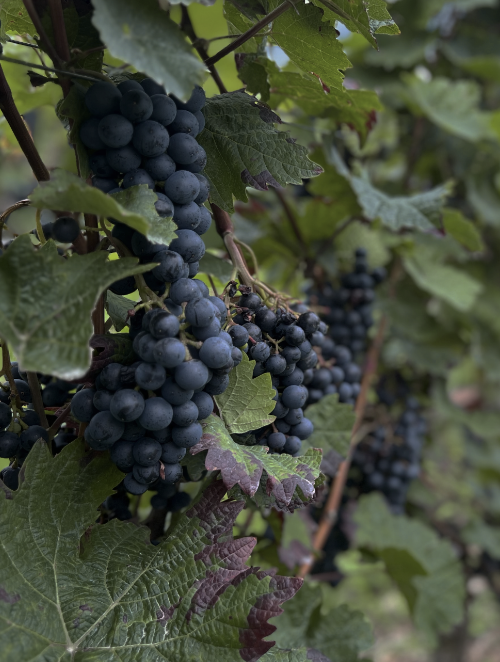
Saar red wines

Saar red wines – Excellent Pinot Noir from the steep slate slopes of the Saar!

Saar red wines have enjoyed growing popularity in recent years! The advancing climate change allows our winemakers to produce excellent Pinot Noir in the increasingly warmer steep slate vineyards, which can stand comparison with Pinots from, for example, the Ahr region.

The cultivation of red grape varieties is not a groundbreaking innovation in itself, as the Romans already cultivated red wine on the steep slopes of the Moselle, Saar and Ruwer rivers over 2,000 years ago. At that time, the climate was comparably warm to today, and so, as then, full-bodied red wines and fruity, refreshing rosé wines, especially from the Pinot Noir grape variety, can be produced again today.

Order the Saar red wines from our top winemakers at winemaker prices from us below.

Alle Weine
Margarethenhof Pinot Noir trocken 2025
Klein: 90+ / 100
Spätburgunder
trocken
Margarethenhof
Margarethenhof Pinot Noir trocken 2025
12,00 €
Tax included
Margarethenhof Vom Fels Réserve Pinot Noir trocken 2022
Klein: 93+ / 100
Spätburgunder
trocken
Margarethenhof
Margarethenhof Vom Fels Réserve Pinot Noir trocken 2022
30,00 €
Tax included
Buy red wine
Buying red wine has never been easier – Discover a select range of high-quality red wines from the Saar region in our assortment. Our carefully selected red wines from the Spätburgunder grape variety come from renowned winemakers who reflect their passion for wine in every bottle. Enjoy the multifaceted interplay of aromas and complex flavor nuances that our red wines have to offer. Let yourself be inspired by our wine variety and buy first-class red wines conveniently online.
Red wine temperature
The correct serving temperature plays a crucial role in optimally enjoying the full aroma of a red wine. The temperature influences the release of aromas and flavor characteristics. Here are some general guidelines for serving temperatures of red wines:

- Light red wines (e.g., Pinot Noir): Ideal at 14-16 °C.
Light red wines best develop their fruity and delicate aromas at slightly cooler temperatures.

- Medium-bodied red wines (e.g., Merlot, Chianti): Enjoy them at 16-18 °C.
These wines exhibit a balanced blend of fruitiness and complexity, which unfolds at slightly warmer temperatures.

- Heavy red wines (e.g., Cabernet Sauvignon, Syrah): Serve at 18-20 °C.
Full-bodied red wines with deep structure and intense aromas develop best at room temperature or slightly above.

It is important to note that these are general recommendations, and personal preferences may vary. To achieve the desired temperature, short-term refrigeration or the use of wine cooling systems can be helpful. An appropriate temperature helps to emphasize the complexity of the wine and ensure an optimal drinking experience.
Red wine Barrique
Red wine aged in barriques has a very special story to tell. The use of oak barrels not only gives the wine a unique variety of aromas, but also shapes its texture and structure. The time the red wine spends in the barrique allows for slow maturation and an exchange of aromas between the wine and the wood. This process gives the red wine complex flavor nuances, ranging from vanilla and toast to spicy notes and a hint of roasted aromas. Particularly strong red wine varieties, such as Cabernet Sauvignon or Merlot, but also Pinot Noir, benefit from barrique aging. The tannins become smoother, while the aromas intensify and blend together. This gives the red wine not only depth, but also a pleasant structure and finesse. Discover the Pinot Noirs from the Saar aged in barriques and let yourself be seduced by the elegance and complexity of these exceptional wines!
Which red wine is the best?
Choosing the best red wine is often subjective and depends on personal preference. However, there are some outstanding red wine varieties that are known worldwide for their quality and taste. Ultimately, the choice of the best red wine depends on which aromas and styles best appeal to individual taste.
Pinot Noir is a classic among red wines, renowned for its elegance and finesse. Pinot Noir wines often present aromas of red berries, cherries, and a subtle spiciness. The best Pinot Noirs often come from regions such as Burgundy in France or Oregon in the USA. But the Pinot Noir/Spätburgunder from the Saar region are also increasingly achieving a remarkable level of quality! Another top performer is Cabernet Sauvignon. This grape variety produces powerful and tannin-rich wines with aromas of blackcurrants, plums, and often a hint of green pepper. Cabernet Sauvignon from regions such as Bordeaux in France or Napa Valley in the USA enjoys an excellent reputation. Merlot is a versatile grape variety that produces fruity and velvety red wines. With aromas of plums, cherries, and herbs, Merlot is particularly accessible and is often described as a "softer" red wine. Bordeaux and California are well-known growing areas for high-quality Merlot. For lovers of powerful and spicy wines, Syrah/Shiraz is an excellent choice. Syrah from the Rhône Valley in France or Shiraz from Australia present themselves with dark fruit aromas, pepper, and often a hint of smoke.
Which grape variety for red wine?
The choice of grape variety for red wine plays a crucial role in determining the taste and characteristics of the wine. Different grape varieties produce different aromas, tannins, and acids, resulting in a wide range of red wine styles. Popular grape varieties for red wine include Pinot Noir, Cabernet Sauvignon, Merlot, Syrah, Tempranillo, Nebbiolo, Grenache, Zinfandel, and Malbec. When selecting a red wine, it is helpful to consider the characteristics of the different grape varieties and to take personal preferences into account.
Where does the red color in red wine come from?
The red color in red wine comes from the skins of the grapes, specifically the color pigments they contain. During the winemaking process, the grapes are fermented along with their skins. This process allows the pigments in the skins to dissolve in the must and give the wine its characteristic red color. The main pigments in the grape skins are anthocyanins. These compounds are responsible for the different shades of red in red wine. The amount and type of anthocyanins vary depending on the grape variety, soil conditions, and climatic conditions, resulting in a wide range of red wine colors, from pale red to ruby red to deep dark purple. During fermentation, the must is regularly brought into contact with the skins to ensure optimal extraction of the pigments. After fermentation is complete, the grape skins are usually pressed, and the young wine is separated from the solids. The wine can then continue to mature and develop its characteristic color and flavor nuances. Overall, the red color in red wine is the result of the complex interplay of grape variety, terroir, and vinification processes.
What is the name of the most important red grape variety in Germany?
The most important red grape variety in Germany is Spätburgunder, also known as Pinot Noir, with a cultivated area of almost 12,000 hectares. Spätburgunder has gained increasing importance in recent years and enjoys growing popularity. The grape variety originally comes from Burgundy, France, and has successfully established itself in German wine regions. Spätburgunder is characterized by its diverse aromas of red berries, cherries, and spices. It can produce an impressive range of wine styles, from light and fruity to complex and powerful. Due to progressing climate change and more favorable growing conditions in German vineyards, Spätburgunder gains ripeness and shows its qualities in increasingly warmer years. The German wine landscape is rich in Spätburgunder growing areas, including the Palatinate, Baden, Rheingau, and Ahr. These regions produce high-quality red wines that are recognized both nationally and internationally. But high-quality Spätburgunder is also increasingly cultivated along the Saar. Spätburgunder shapes the German red wine scene and stands for elegance, finesse, and impressive expressiveness in the glass.