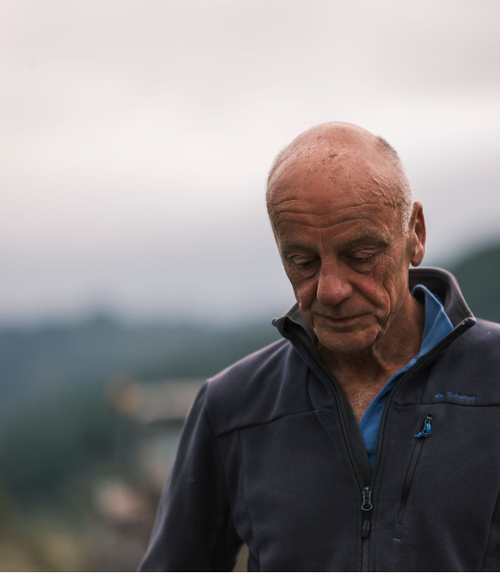
Egon Mueller

Egon Müller - Scharzhof – a name that resounds like thunder in the wine world!

No other German winery has stood for quality and international renown to the same extent as Egon Müller for decades. The Rieslings from Scharzhof achieve top prices year after year, because wine lovers all over the world specifically seek out the world's best sweet wines and know that the prices asked for such elaborately produced unique items are nevertheless appropriate. There is no on-site sales . Egon Müller only sells his treasures to a handful of German retailers, and we are proud to have belonged to this select group since our beginnings in 2009 and to be able to market his top Rieslings in his home region on the Saar.

With us, you get Egon Müller wine perfectly stored after purchase, directly from Scharzhof .

Alle Weine
Klein: 91+ / 100
Riesling
fruity
Egon Mueller
Egon Müller Scharzhof Riesling 2024
79,87 € / l
59,90 €
Tax included
Klein: 92+ / 100
Riesling
fruity
Egon Mueller
Egon Müller Scharzhof Riesling 2023
79,87 € / l
59,90 €
Tax included
Klein: 92+ / 100
Riesling
fruity
Egon Mueller
Egon Müller Scharzhof Riesling 2023 Magnum
99,93 € / l
149,90 €
Tax included
Klein: 92+ / 100
Riesling
fruity
Egon Mueller
Egon Müller Scharzhof Riesling 2023 Doppelmagnum
99,97 € / l
299,90 €
Tax included
Klein: 91+ / 100
Riesling
fruity
Egon Mueller
Egon Müller Scharzhof Riesling 2022
79,87 € / l
59,90 €
Tax included
Klein: 92+ / 100
Riesling
fruity
Egon Mueller
Egon Müller Scharzhof Riesling 2021
79,87 € / l
59,90 €
Tax included
Klein: 92+ / 100
Riesling
fruity
Egon Mueller
Egon Müller Scharzhof Riesling 2021 Magnum
93,27 € / l
139,90 €
Tax included
Klein: 90+ / 100
Riesling
fruity
Egon Mueller
Egon Müller Scharzhof Riesling 2020 Magnum
86,60 € / l
129,90 €
Tax included
Klein: 92+ / 100
Riesling
fruity
Egon Mueller
Egon Müller Scharzhof Riesling 2019 Magnum
93,27 € / l
139,90 €
Tax included
Klein: 94+ / 100
Riesling
fruity
Egon Mueller
Egon Müller Scharzhofberger Riesling Kabinett 2024
266,53 € / l
199,90 €
Tax included
Klein: 96+ / 100
Riesling
fruity
Egon Mueller
Egon Müller Scharzhofberger Riesling Kabinett 2023
266,53 € / l
199,90 €
Tax included
Klein: 96+ / 100
Riesling
fruity
Egon Mueller
Egon Müller Scharzhofberger Riesling Kabinett 2023 Magnum
293,27 € / l
439,90 €
Tax included
Klein: 94+ / 100
Riesling
fruity
Egon Mueller
Egon Müller Scharzhofberger Riesling Kabinett 2022
239,87 € / l
179,90 €
Tax included
Klein: 94+ / 100
Riesling
fruity
Egon Mueller
Egon Müller Scharzhofberger Riesling Kabinett 2022 Magnum
253,27 € / l
379,90 €
Tax included
Klein: 97+ / 100
Riesling
fruity
Egon Mueller
Egon Müller Scharzhofberger Riesling Kabinett 2021
266,53 € / l
199,90 €
Tax included
Klein: 97+ / 100
Riesling
fruity
Egon Mueller
Egon Müller Scharzhofberger Riesling Kabinett 2021 Magnum
279,93 € / l
419,90 €
Tax included
Klein: 93+ / 100
Riesling
fruity
Egon Mueller
Egon Müller Scharzhofberger Riesling Kabinett 2020
213,20 € / l
159,90 €
Tax included
Klein: 93+ / 100
Riesling
fruity
Egon Mueller
Egon Müller Scharzhofberger Riesling Kabinett 2020 Magnum
226,60 € / l
339,90 €
Tax included
Klein: 95+ / 100
Riesling
fruity
Egon Mueller
Egon Müller Scharzhofberger Riesling Kabinett 2018
213,20 € / l
159,90 €
Tax included
Klein: 96+ / 100
Riesling
noble sweetness
Egon Mueller
Egon Müller Scharzhofberger Spätlese 2023
399,87 € / l
299,90 €
Tax included
Klein: 96+ / 100
Riesling
noble sweetness
Egon Mueller
Egon Müller Scharzhofberger Spätlese 2023 Magnum
416,60 € / l
624,90 €
Tax included
Klein: 97+ / 100
Riesling
noble sweetness
Egon Mueller
Egon Müller Scharzhofberger Late Harvest 2022
359,87 € / l
269,90 €
Tax included
Klein: 97+ / 100
Riesling
noble sweetness
Egon Mueller
Egon Müller Scharzhofberger Late Harvest 2022 Magnum
373,27 € / l
559,90 €
Tax included
Klein: 97+ / 100
Riesling
noble sweetness
Egon Mueller
Egon Müller Scharzhofberger Late Harvest 2021
399,87 € / l
299,90 €
Tax included
About the Egon Müller winery
For over a century, the Egon Müller-Scharzhof winery has undoubtedly been among the best in the world, and is undeniably the flagship of German winemaking. It is the only German member of the "Primum Familiae Vini," an association of 12 legendary wineries, placing it alongside such renowned names as Mouton Rothschild, Vega-Sicilia, Sassicaia, and Haut-Brion. The winery, called Scharzhof, is located near Wiltingen at the foot of the eponymous, world-famous Scharzhofberg in a side valley of the Saar. In this former monastery, the world's best sweet wines are produced from the Riesling grape variety, which have earned the winery its legendary reputation. Since the 18th century, the Müller family has cultivated vineyards on the Scharzhofberg, a south-facing slope of over 27 hectares between Wiltingen and Oberemmel, considered one of the best Riesling vineyards in the world. However, the original Scharzhofberg was significantly smaller, and the winery still owns over 8 hectares in the heart of the Scharzhofberg, making it the largest shareholder ahead of Reichsgraf von Kesselstatt, the Episcopal wineries, von Hövel, and Van Volxem. To this day, the winery cultivates more than 3 hectares of root-stock vines, over 100 years old (planted between 1890-1900), which, year after year, with the greatest effort, produce the winery's best wines, such as the Scharzhofberger Kabinett Alte Reben Versteigerung, on heavily weathered blue Devonian slate soils. Besides the Scharzhofberg, Egon Müller owns other outstanding vineyards on the Saar. He markets the wines from the Wiltinger Braune Kupp vineyard under his second winery, Le Gallais, and for his estate wine Scharzhof, he uses grapes from no less prestigious vineyards than Saarburger Rausch, Wawerner Jesuitengarten, Oberemmeler Rosenberg, and, depending on the vintage, more or less Scharzhofberger. Mr. Müller considers the slate soils and the extended, slow ripening periods to be the main reasons for the quality of his wines. His family chose the vineyards not because they yielded the highest must weights, but because they produced, and continue to produce, very elegant wines! To understand their current world renown, it is worth taking a look at their history:


"World-class bastards for over a century"


For over 200 years, the Müller family, now in its fifth generation, has been cultivating vineyards at the foot of the Scharzhofberg. Jean-Jacques Koch, the great-great-great-grandfather of Egon Müller, was able to buy the former Trier monastery estate St. Martin from the French Republic in 1797, during the time of the French Revolution. His son, Egon Müller I., brought the winery to international fame for the first time, and it has been the custom for four generations that the firstborn male descendant bears the name Egon. Today, the legendary winery is managed by Egon Müller IV. His son, Egon Müller V., is now of age and increasingly works in the business alongside his own Scharzhofberg honey production. Under the direction of Egon I (1852-1936), son of Felix Müller and Elisabeth Koch, the wines from the Scharzhofberg first attracted attention at the beginning of the 20th century when they won first prize at the World Fairs in Paris (1900), St. Louis (1904), and Brussels (1910). His son, Egon Müller II (1887-1941), unfortunately died far too young in a tragic tractor accident in the vineyard, so his widow had to manage the business alone through the Second World War – successfully! In 1945, Egon Müller III. took over, immediately initiated the groundbreaking quality policy of the house, and uncompromisingly focused the business on the production of high-class wines – a wise decision, as it turned out, which brought the winery renewed prosperity. This enabled him to purchase plots (1985 & 1997) in the Scharzhofberg twice, as well as the Kanzemer winery Le Gallais with outstanding vineyards in the Wiltinger Kupp and Braunen Kupp.
But what is the reason for the legendary reputation of the Egon Müller-Scharzhof winery?


"A cask of wine that is enough to pay all the costs incurred at the winery in one year"


The legendary VDP auctions in Trier played a decisive role. In 1896, Egon Müller I achieved the incredible price of 10,500 gold marks for a fuder (a traditional 1,000-liter oak barrel) of the 1895 Scharzhofberger finest Auslese. From today's perspective, this corresponds to a purchasing power of more than €130,000! In the following years, he was able to achieve outstanding results of around 10,000 gold marks per fuder at the annual auction, before a fuder of 1911 Scharzhofberger was auctioned in 1913 for the still unsurpassed price of 10,600 gold marks. To put the prices of that time into perspective: At that time, it was possible to pay the entire annual costs of the winery with just one fuder of wine! These fine wines were served at European royal courts and in the finest restaurants worldwide. Under the direction of Egon Müller II and subsequently his widow, the winery was unable to match the auction results around 1900 due to the consequences of the Second World War, before Egon Müller III, from the late 1980s/early 1990s, was able to achieve consistently high prices again at the annual VDP auction in Trier. His son, the current owner Egon Müller IV (born 1959), ensured from his takeover in 1997 that the wines from Scharzhof regained their former renown worldwide. This was soon reflected in the results of the Trier wine auction, where he set one world record after another. The 131st Prädikatswein auction of the Großer Ring in Trier in 2015 remains unforgettable, where his Egon Müller Scharzhofberger Riesling Trockenbeerenauslese 2003 set the current world record for the most expensive wine ever brought to market at €12,000 (net). Including the auction fee of 5% and 19% VAT, that's almost €15,000 gross per 0.75l bottle! A total of 22 0.75l bottles were auctioned at a price of €12,000 each, as well as 36 half (0.375l) bottles at a price of €5,500 per bottle. Therefore...
30 liters of this exceptional wine achieved a net revenue of €462,000, thus returning to the fabulous prices of 1900 set by his great-great-great-grandfather Egon Müller I. This impressively demonstrates the reputation that Saar wines enjoy internationally today.
But what are the reasons that wine lovers all over the world are willing to pay these enormous prices?


"Outstanding wine quality for over 100 years, scarcity, and the unparalleled longevity of the wines are the main reasons for the legendary reputation."


1. Outstanding wine quality for over 100 years

A decisive factor for outstanding quality is consistency. Thus, the Egon Müller wine collection has been a contender for the collection of the year practically every year for over 100 years. During this time, there have been average and numerous poor vintages, but while other once world-famous wineries did not survive some crises, excellent wines were also produced at Scharzhof in poor vintages. Egon Müller IV. considers 1987 as the last truly bad vintage, but even his 1987 wines now, after over 30 years of aging, prove to be elegant, mineral Rieslings.

2. Scarcity

One of the most important factors for the outstanding quality of Egon Müller wines is the extremely low yields. This means that only around 100,000 bottles are produced annually at Scharzhof, and significantly fewer in many years – far too little to meet the enormous worldwide demand.

3. Longevity

The Scharzhofberger wines enjoy their legendary reputation primarily because of their enormous longevity. Hardly any other wine in the world matures as excellently as the wines from Scharzhofberg, and Egon Müller's Rieslings crown the whole thing. The maturation potential of his wines should therefore be expressed in decades rather than years! In their youth, his wines from Scharzhofberg often appear very closed and need many years of cellar aging to fully develop their quality. Even for the seemingly simple Gutswein Scharzhof, an aging time of at least 10 years is recommended; Kabinett wines often need 20 years to truly shine; Spätlesen reach their peak after 30 years, and Auslesen wines amaze with their brilliance and mineral freshness even after 50 years or more! The Goldkapsel and auction wines, Beerenauslesen, Trockenbeerenauslesen, and Eisweins are true monuments of winemaking and practically have no expiration date. With good storage, they can easily outlive a human lifespan.

But what is the secret behind the inimitable aging potential of Egon Müller's Rieslings?


"The key to outstanding wine quality lies in the work in the vineyard."


The main reason for the quality of Egon Müller's Rieslings lies in his philosophy, which has solidified over a century and was aptly summarized by Egon Müller III:
"The quality of the wine is 100 percent determined in the vineyard. In the cellar, it is not possible to achieve even 101 percent. But it is a great achievement to bring the full potential of the grapes into the bottle.”
Therefore, work in the vineyard enjoys the highest priority, because the Müllers are convinced that the aromas for a great wine are entirely created in the ripening grapes in the vineyard. For this reason, he cultivates the vines, some of which are over 100 years old, largely according to traditional methods, which is mainly due to the high average age of his vines and distinguishes him from other producers. For example, he forgoes green harvesting to reduce yield, because his old vines naturally bear only a few highly aromatic berries. The average yield is often only 30-40 hl/ha, which is not even half the normal hectare yields of other top wineries. In autumn, the grapes are carefully selected in several picking rounds to perfectly bring out the different predicate levels. Egon Müller thus produces a wide variety of predicate levels in different sweetness levels from a single grape variety – Riesling – from fruity Kabinett to noble sweet Trockenbeerenauslese and, if the weather permits, also Eiswein. For his noble sweet wines, the influence of the noble rot fungus Botrytis cinerea is crucial, because the berries affected by it ripen on the vine under ideal weather conditions and give Egon Müller's sweet wines their complex, aromatic depth and oily texture. Therefore, Egon Müller usually forgoes the last spraying against Botrytis to promote the settlement of the noble rot fungus. In general, he tries to keep his plant protection management as moderate as possible, adapted to the vintage.


"Traditional winemaking craftsmanship for world-class wines with unparalleled finesse and balance"


Basically, all grapes are gently pressed using an old basket press and fermented in the old vaulted cellar in traditional large wooden barrels at moderate temperatures of around 15 degrees Celsius using natural yeasts. Nothing has changed since the beginnings under Egon Müller I. The winery still relies on the traditional large wooden barrels because Egon Müller values the minimal oxygen permeability of the oak wood. Through micro-oxygenation, the relatively high acidity of his Rieslings blends more harmoniously into the wines, so that his Rieslings appear less steely and brittle than if they were aged in stainless steel.
Another constant runs through the history of the winery: Since its inception, only off-dry Rieslings have been produced. Although there were attempts with dry wines in the 1980s after the glycol scandal, Egon Müller IV quickly came to the conviction that off-dry wines ideally reflect the terroir of the Scharzhofberg, and that it would therefore be pointless for him to produce dry wines.

Anyone expecting his wines to taste cloyingly sweet will be proven wrong with the first sip. His wines possess an unparalleled finesse and balance, in which the supporting residual sweetness fits perfectly into the framework of pronounced salty slate minerality, razor-sharp acidity, and brilliant fruit and herbal aromas. A typical Scharzhofberger from Egon Müller exhibits pronounced notes of ripe citrus fruits (grapefruit, lemon), yellow stone fruit (mirabelle plums), exotic fruits (passion fruit, maracuja, blackcurrant), as well as minty hints and the typically pronounced salty/smoky slate minerality. The higher the predicate, the more the influence of Botrytis comes into play, and the aromatics of these noble sweet masterpieces turn towards the finest dried fruit aromas (raisins, figs, dates) as well as noble honey, tobacco, and spice aromas.
»Weltklasserieslinge seit über einem Jahrhundert«
Seit über 200 Jahren betreibt die Familie Müller in nun fünfter Generation Weinbau am Fuße des Scharzhofbergs. Jean-Jacques Koch, der Ur-Ur-Urgroßvater von Egon Müller, konnte zur Zeit der französischen Revolution im Jahr 1797 das einstige Trierer Klostergut St. Martin der Französischen Republik abkaufen. Sein Sohn, Egon Müller I., brachte das Weingut erstmals zu internationalem Ruhm und so ist es seit vier Generationen Brauch, dass der erstgeborene männliche Nachkömmling den Namen Egon trägt. Heute wird das legendäre Weingut von Egon Müller IV. geleitet. Sein Sohn, Egon Müller V., ist mittlerweile volljährig und arbeitet neben seiner eigenen Scharzhofberger Honigproduktion zunehmend im Betrieb mit. Unter der Regie von Egon I. (1852-1936), Sohn von Felix Müller und Elisabeth Koch, sorgten die Weine vom Scharzhofberg erstmals zu Beginn des 20. Jahrhunderts für Aufsehen, als sie den ersten Preis bei den Weltausstellungen in Paris (1900), St. Louis (1904) und Brüssel (1910) gewannen. Sein Sohn, Egon Müller II. (1887-1941) verstarb leider viel zu früh bei einem tragischen Traktorunfall im Weinberg, sodass seine Witwe den Betrieb alleine durch den zweiten Weltkrieg bringen musste - mit Erfolg! Denn im Jahr 1945 übernahm Egon Müller III. das Zepter, leitete umgehend die richtungsweisende Qualitätspolitik des Hauses ein und richtete den Betrieb kompromisslos auf die Produktion hochklassiger Weine aus – eine weise Entscheidung, wie sich herausstellen sollte, die dem Weingut zu neuem Wohlstand verhalf. So war es ihm möglich, zweimal Parzellen (1985 & 1997) im Scharzhofberg sowie das Kanzemer Weingut Le Gallais mit hervorragenden Lagen in der Wiltinger Kupp und Braunen Kupp dazuzukaufen.
Doch worin liegt der legendäre Ruf des Weinguts Egon Müller-Scharzhof begründet?
»Ein Fuder Wein das ausreicht, um alle im Weingut anfallenden Kosten eines Jahres zu bezahlen«
Einen entscheidenden Anteil haben die legendären VDP-Versteigerungen in Trier. So erzielte Egon Müller I. im Jahr 1896 den irrwitzigen Preis von 10.500 Goldmark für ein Fuder (traditionelles 1.000l Eichenholzfass) der 1895er Scharzhofberger feinsten Auslese. Aus heutiger Sicht entspricht das einer Kaufkraft von mehr als 130.000 €! Auch in den Folgejahren konnte er bei der jährlichen Versteigerung hervorragende Ergebnisse um die 10.000 Goldmark pro Fuder erzielen, ehe 1913 ein Fuder 1911er Scharzhofberger für den bis heute unerreichten Preis von 10.600 Goldmark versteigert wurde. Nur um die damaligen Preise in Relation zu setzen: Damals war es möglich, mit nur einem Fuder Wein die gesamten Kosten eines Jahres des Weinguts zu bezahlen! Diese edlen Kreszenzen wurden an den europäischen Adelshöfen und in den feinsten Restaurants auf der ganzen Welt kredenzt. Unter der Regie von Egon Müller II. und in der Folge seiner Witwe, konnte das Weingut durch die Folgen des Zweiten Weltkriegs nicht mehr an die Versteigerungsergebnisse rund um 1900 anknüpfen, ehe Egon Müller III. ab Ende der 80er / Anfang der 90er Jahre wieder regelmäßig enorm hohe Preise auf der jährlichen VDP-Versteigerung in Trier erzielen konnte. Sein Sohn, der heutige Betriebsinhaber Egon Müller IV. (Jahrgang 1959), sorgte seit seiner Betriebsübernahme 1997 dafür, dass die Weine vom Scharzhof weltweit ihr altes Renommee wiedererlangen. Dies sollte sich auch bald in den Ergebnissen der Trierer Weinversteigerung wiederspiegeln, in denen er einen Weltrekord nach dem anderen erzielte. Bis heute unvergessen ist die 131. Prädikatsweinversteigerung des Großen Rings in Trier im Jahr 2015, wo seine Egon Müller Scharzhofberger Riesling Trockenbeerenauslese 2003 mit 12.000 € (netto) den bis heute gültigen Weltrekord für den teuersten frisch auf den Markt gebrachten Wein der Welt aufstellte. Inklusive der Auktionsgebühr von 5% und 19% MwSt. macht das knapp 15.000 € brutto pro 0,75l Flasche! Versteigert wurden insgesamt 22 0,75l Flaschen zu einem Preis von jeweils 12.000 € sowie 36 halbe (0,375l) Flaschen zu einem Preis von 5.500 € die Flasche. Damit erzielten 30l dieses Ausnahmeweines einen Nettoerlös von 462.000 € womit er wieder an die Fabelpreise von 1900 seines Ur-Ur-Urgroßvaters Egon Müller I. anknüpft. Das zeigt eindrucksvoll, welchen Ruf die Saarweine heute international wieder genießen.

Doch was sind die Gründe, die Weinliebhaber auf der ganzen Welt dazu bewegen, diese enormen Preise zu bezahlen?
»Herausragende Weinqualität seit über 100 Jahren, Knappheit und eine unerreichte Langlebigkeit der Weine als Hauptgründe für den legendären Ruf«
1. Herausragende Weinqualität seit über 100 Jahren

Ein entscheidender Faktor für überragende Qualität heißt Konstanz. So ist die Weinkollektion von Egon Müller praktisch seit über 100 Jahren Jahr für Jahr ein Anwärter auf die Kollektion des Jahres. In dieser Zeit hat es immer wieder durchschnittliche und auch zahlreiche schlechte Jahrgänge gegeben, doch während andere, einst weltberühmte Weingüter manche Krisen nicht überstanden haben, wurden auf Scharzhof auch in schlechten Jahrgängen hervorragende Weine gekeltert. So bezeichnet Egon Müller IV. 1987 als den letzten wirklich schlechten Jahrgang, doch selbst seine 87er Weine stellen sich nun mit über 30 Jahren der Reife als elegant mineralische Rieslinge heraus.

2. Knappheit

Eines der wichtigsten Faktoren für die herausragende Qualität der Egon Müller Weine sind die extrem geringen Erträge. Dadurch werden auf Scharzhof jährlich lediglich rund 100.000 Flaschen produziert, in vielen Jahren auch deutlich weniger – bei weitem zu wenig, um die enorme weltweite Nachfrage zu bedienen.

3. Langlebigkeit

Ihren legendären Ruf genießen die Scharzhofberger Weine vor allem auch wegen ihrer enormen Langlebigkeit. Kaum ein anderer Wein der Welt reift so exzellent, wie die Weine vom Scharzhofberg und Egon Müllers Rieslinge setzen dem Ganzen die Krone auf. So sollte das Reifepotenzial seiner Weine besser in Jahrzehnten als in Jahren ausgedrückt werden! In jungen Jahren wirken seine Weine vom Scharzhofberg oftmals noch sehr verschlossen und brauchen viele Jahre der Kellerreife, bis sie ihre ganze Qualität entfalten. So ist selbst für den vermeintlich einfachen Gutswein Scharzhof eine Reifezeit von mindestens 10 Jahren anzuraten, Kabinette brauchen oft 20 Jahre, um richtig zu erstrahlen, Spätlesen drehen nach 30 Jahren voll auf und die Auslesen verblüffen mit 50 Jahren und mehr der Reife noch aufgrund ihrer Brillanz und mineralischen Frische! Die Goldkapsel- und Versteigerungsweine, Beerenauslesen, Trockenbeerenauslesen und Eisweine sind wahre Monumente der Weinkunst und haben praktisch kein Verfallsdatum. Bei guter Lagerung können sie ein Menschenleben problemlos überdauern.

Doch was ist das Geheimnis hinter der unnachahmlichen Reifefähigkeit der Rieslinge von Egon Müller?
»Der Schlüssel für herausragende Weinqualität liegt in der Arbeit im Weinberg«
Der Hauptgrund für die Qualität von Egon Müllers Rieslingen liegt in seiner Philosophie, die sich in über einem Jahrhundert verfestigte und Egon Müller III. treffend auf den Punkt brachte: „Die Qualität des Weins entsteht zu 100 Prozent im Weinberg. Im Keller ist es nicht möglich, auch nur 101 Prozent zu erreichen. Aber es ist eine große Leistung, das ganze Potential der Trauben in die Flasche zu bringen.” Demnach genießt die Arbeit im Weinberg höchste Priorität, denn die Müllers vertreten die Überzeugung, dass die Aromen für einen großen Wein zur Gänze in den heranreifenden Trauben im Weinberg entstehen. Aus diesem Grund bewirtschaftet er die, teils über 100 Jahre alten Reben in hohem Maße nach traditionellen Methoden, was vor allem durch das hohe Durchschnittsalter seiner Reben bedingt ist und ihn von anderen Produzenten unterscheidet. So verzichtet er etwa auf eine Grünlese zur Ertragsreduktion, denn seine alten Reben tragen von Natur aus nur noch wenige hocharomatische Beeren. Der Durchschnittsertrag liegt dabei oftmals bei nur 30-40 hl/ha, was nichtmals der Hälfte der normalen Hektarerträge anderer Spitzenweingüter entspricht. Die Trauben werden im Herbst in mehreren Lesedurchgängen sorgfältig selektioniert, um die verschiedenen Prädikatsstufen perfekt herauszuarbeiten. So stellt Egon Müller aus nur einer einzigen Rebsorte – Riesling – verschiedenste Prädikatsstufen in verschiedenen Süßegraden, vom fruchtigen Kabinett bis hin zur edelsüßen Trockenbeerenauslese und wenn es die Witterung zulässt, auch Eiswein her. Für seine edelsüßen Weine ist der Einfluss des Edelfäulepilzes Botrytis cinerea entscheidend, denn die von ihm befallenen Beeren rosinieren bei idealen Witterungsbedingungen am Rebstock ein und verleihen Egon Müllers Süßweinen ihre komplexe, aromatische Tiefe und ölige Textur. Daher verzichtet Egon Müller i.d.R. auf die letzte Spritzung gegen Botrytis, um die Ansiedlung des Edelfäulepilzes zu begünstigen. Allgemein versucht er sein Pflanzenschutzmanagement auf den Jahrgang angepasst so moderat wie möglich zu halten.
»Traditionelles Winzerhandwerk für weltklasse Weine mit unvergleichlicher Finesse und Balance«
Grundsätzlich werden alle Trauben mittels einer alten Korbkelter schonend abgepresst und im alten Gewölbekeller in traditionellen Fuderfässern, bei moderaten Temperaturen von um die 15 Grad mit natürlichen Hefen vergoren. Daran hat sich seit den Anfängen unter Egon Müller I. nichts geändert. Das Weingut setzt dabei immer noch auf die traditionellen Fuderfässer da Egon Müller die minimale Sauerstoffdurchlässigkeit des Eichenholzes schätzt. Durch Mikrooxygenierung fügt sich dabei die relativ hohe Säure seiner Rieslinge harmonischer in die Weine ein, sodass seine Rieslinge weniger stahlig und spröde wirken, wie wenn sie in Edelstahl ausgebaut werden würden.

Eine weitere Konstante zieht sich ebenfalls durch die Geschichte des Weinguts: Seit jeher werden ausschließlich restsüße Rieslinge hergestellt. Es gab zwar in den 80er Jahren nach dem Glykolskandal Versuche mit trockenen Weinen, jedoch gelangte Egon Müller IV. schnell zu der Überzeugung, dass restsüße Weine ideal das Terroir des Scharzhofbergs widerspiegeln und es somit für ihn unsinnig wäre, die Weine trocken auszubauen.

Wer nun erwartet, dass seine Weine pappsüß schmecken, den wird der erste Schluck eines Besseren belehren. Seine Weine haben eine unvergleichliche Finesse und Balance, in der sich die dienende Restsüße als Puzzleteil perfekt in das Gerüst von ausgeprägt salziger Schiefermineralität, laserscharfer Säure und brillanten Frucht- und Kräuteraromen einfügt. Ein typischer Scharzhofberger von Egon Müller weist ausgeprägte Noten von reifen Zitrusfrüchten (Grapefruit, Zitrone), gelbem Steinobst (Mirabellen), exotischen Früchten (Passionsfrucht, Maracuja, Cassis) sowie minzige Anklänge und die typisch ausgeprägte salzig / rauchige Schiefermineralität auf. Je höher das Prädikat, desto mehr kommt der Einfluss von Botrytis zum Tragen und die Aromatik dieser edelsüßen Meisterwerke dreht hin zu feinsten Trockenobstaromen (Rosinen, Feige, Datteln) sowie edlen Honig-, Tabak- und Gewürzaromen.